If your team looks busy but results feel thin, you do not have an effort problem. You have an employee productivity problem. People jump between chat, meetings, and half-finished tasks. Managers ask for updates. Deadlines slip. Morale dips. Then someone suggests another tool, another pep talk, or another late night — and nothing fundamental changes.
Employee productivity is the ability of people to turn attention into valuable outcomes: finished work, fewer errors, faster cycle times, and healthier engagement. It is not the same as hours online. A packed calendar can still produce weak employee performance.
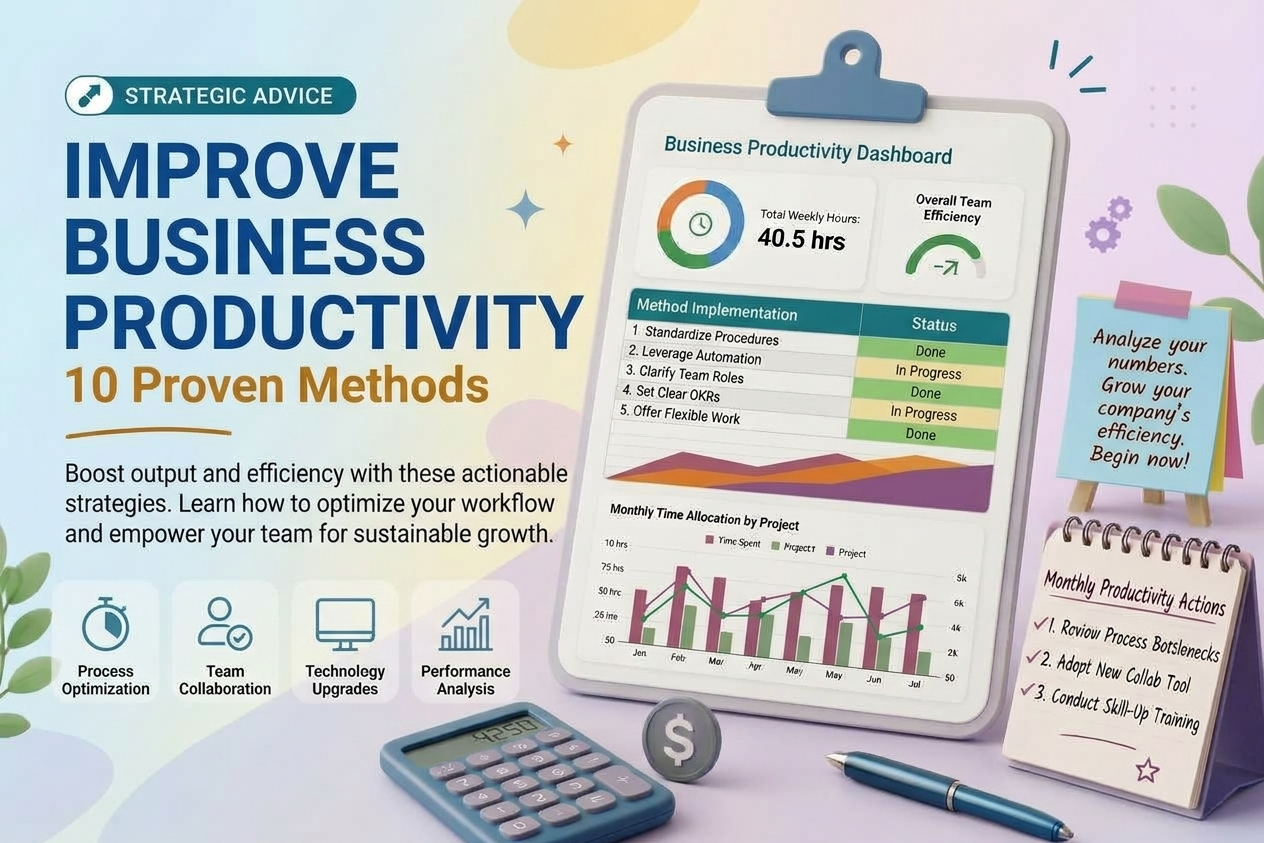
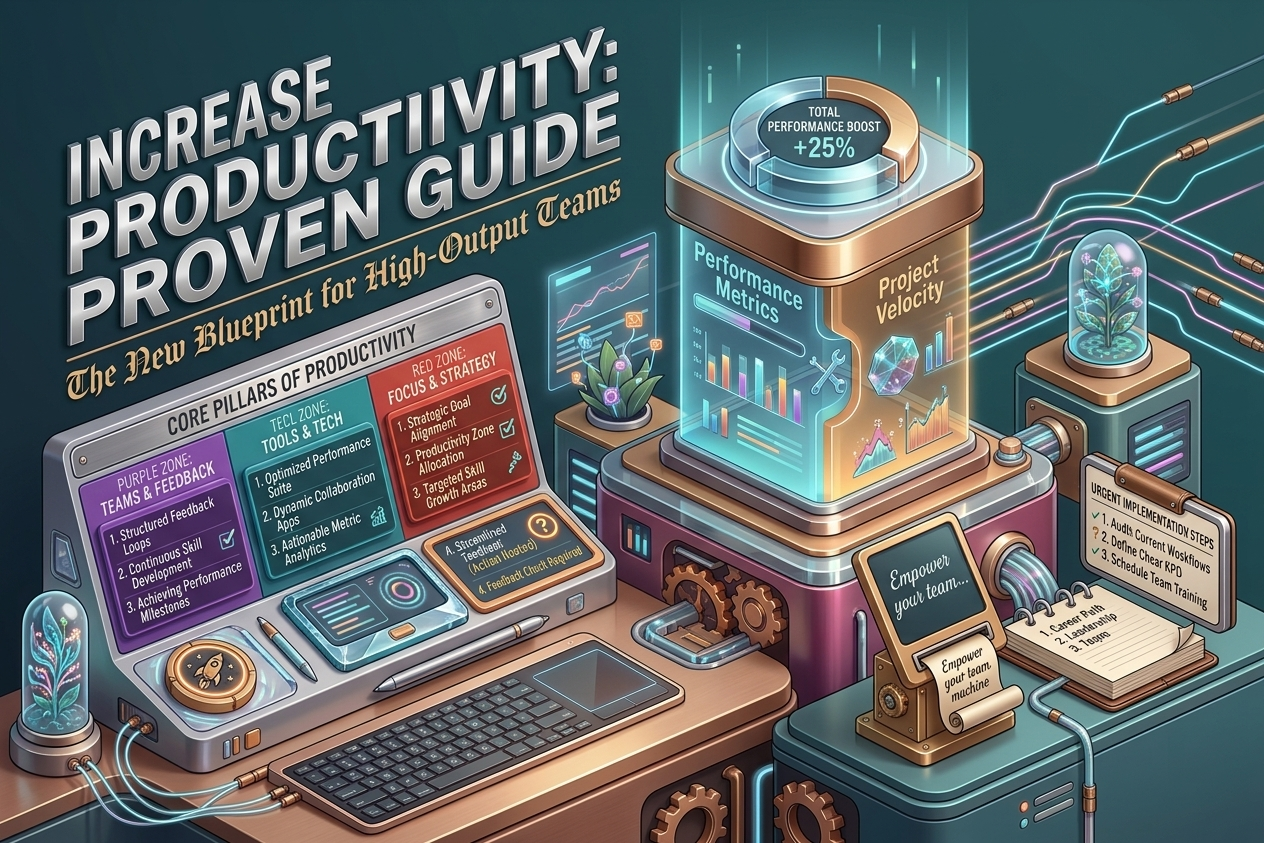
This complete guide explains how to increase employee productivity with a clear list of methods you can run inside a small business, agency, startup, or remote team. You will get direct answers, step-by-step actions, real workplace examples, best practices, common mistakes, and FAQs. The goal is practical: improve employee productivity in ways your team can feel within weeks.
What is employee productivity? (Direct answer)
Employee productivity is completed work that advances a business goal, delivered on time, at acceptable quality, with sustainable effort. High workforce productivity shows up as shorter cycle times, fewer reopened tasks, clearer ownership, and stronger workplace engagement — not as more messages sent.
- Output: finished deliverables, closed tickets, shipped campaigns
- Quality: less rework and fewer handoff failures
- Speed: less time from “started” to “done”
- Engagement: people who know what matters and why
How to improve employee productivity in one sentence
To improve employee productivity, make priorities visible, remove friction from the workflow, protect focus time, and review outcomes weekly — then adjust the system, not just the pep talk.
10 employee productivity strategies that work
Use this as a ranked list for most small teams. Start at the top. Each method below includes steps and a real-world scenario so you can apply practical ways to increase productivity at work without guessing.
1. Set weekly outcomes instead of endless task piles
Long lists create motion. Short outcome lists create progress. If every morning starts with “What should I work on?”, priorities are too fuzzy to support team productivity.
- Every Monday, choose 3–5 outcomes that would make the week a success.
- Assign one owner to each outcome.
- Break outcomes into the smallest tasks needed to finish them.
- Park non-critical work so it cannot compete for attention.
- Review Friday: what finished, what slipped, and why.
Example: A 9-person startup marketing team stopped tracking 60 mixed tickets and set three weekly outcomes: launch the onboarding email sequence, close two partner pages, and ship the pricing FAQ. Status meetings shrank because progress was obvious. That is how to boost productivity in the workplace by forcing trade-offs.
2. Give every active item one clear owner
Shared ownership sounds collaborative. In practice, it often means nobody is accountable. Methods to improve employee performance almost always start with visible ownership.
- Audit active work and flag anything without a single owner.
- Assign one accountable person per deliverable.
- Define “done” before work starts.
- Require a next action and date on blocked items.
- Escalate blockers within 24–48 hours.
Example: An agency had proposal revisions floating in Slack with three “helpers.” They moved each proposal into a project with one owner and a checklist. Turnaround improved because waiting for “someone” ended. Client work systems like project management in Aenflow keep ownership attached to clients and tasks instead of chat threads.
3. Cut low-value meetings and switch status to writing
Meetings are often the silent tax on employee efficiency. A 45-minute meeting with eight people costs six hours of collective attention. Some meetings decide. Many only recycle updates.
- List recurring meetings and their purpose.
- Cancel any meeting with no decision, unblock, or outcome review.
- Move status to a written update with blockers only.
- Keep decision meetings short and end with owners and deadlines.
- Protect at least one daily deep-work block.
Example: A remote support team replaced daily standup with an async board update by 9:30 a.m. and kept a 20-minute blocker huddle three days a week. Each person recovered hours of focus. That is a concrete way to improve team productivity without hiring.
4. Limit work in progress so people finish faster
Starting more than you can finish creates fake progress. Boards look full. People look busy. Nothing ships. Limiting WIP is one of the strongest employee productivity strategies that work for overloaded teams.
- Count active major items per person.
- Cap WIP (often 1–2 major items).
- Finish or kill stalled work before starting new work.
- Make “almost done” items the first priority each morning.
- Review aging tasks weekly — idle for 7+ days needs a decision.
Example: A product design squad capped each designer at two active projects. Cycle time fell because attention stopped spreading across six half-finished launches. Throughput rose even though they started fewer items.
5. Strengthen employee engagement with progress, not perks
Want to know how to engage employees effectively? Show them progress. People stay motivated when work moves, feedback is timely, and goals feel real. Perks help, but progress compounds.
- Make weekly wins visible in a shared review.
- Recognize specific outcomes, not vague “great energy.”
- Ask what blocked people — then remove one blocker fast.
- Connect tasks to a customer or business result.
- Keep goals challenging but finishable within the week.
Example: A coaching company’s ops lead started a Friday “ships and blockers” note. Workplace engagement rose because people saw finished work and got help on stuck items the same week — not in a quarterly survey.
6. Teach managers how to motivate employees at work
Managers often try to motivate employees with pressure. Pressure creates short bursts. Clarity creates consistency. If you want to know how to motivate employees at work, train managers to set outcomes, unblock work, and coach — not to hover.
- Replace vague check-ins with outcome check-ins.
- Ask “What is blocked?” before “Are you busy?”
- Coach on priorities when workload spikes.
- Protect focus time instead of filling calendars.
- Review capacity with data, not optimism.
Example: A consultancy stopped daily micromanagement messages and moved to two weekly coaching slots plus a shared board. Employee engagement improved because trust replaced surveillance, while delivery stayed visible.
7. Standardize recurring work with checklists
If your team reinvents onboarding, reporting, or QA every time, you pay a creativity tax on routine work. Standardization is not bureaucracy when it removes decisions that should not be remade.
- List weekly and monthly recurring processes.
- Write a short checklist for each one.
- Store templates where work starts.
- Update the checklist after every miss.
- Keep SOPs short enough that people actually use them.
Example: A small agency built a client kickoff checklist: contract, brief, shared folder, first milestone, billing setup. New clients launched in one afternoon instead of three chaotic days. Notion works well for SOPs; keep active delivery in the system that owns the client and project.
8. Track time lightly to spot capacity problems
You cannot fix overload you cannot see. Light time tracking reveals underpriced work, hidden meetings, and people carrying too much. This is not about surveillance. It is about honest workforce productivity.
- Track time on tasks or projects, not vague “admin.”
- Review weekly: which work consumed hours relative to value?
- Flag work that repeatedly exceeds estimates.
- Use the data to reprice, rescope, or redesign the process.
- Keep logging friction low so people keep doing it.
Example: An agency found “quick revisions” consumed nearly a fifth of weekly hours. They tightened briefs and revision limits. Capacity returned without hiring. For client businesses, time tracking on tasks helps hours roll into invoices and planning — see also our guide on improving business productivity.
9. Create one source of truth for work
Tool sprawl destroys employee efficiency. When tasks live in chat, files live in drives, and deadlines live in someone’s head, people spend energy searching instead of shipping.
- Choose one system of record for ownership and status.
- Choose one place for long-form knowledge.
- Choose one primary channel for decisions.
- Write the rule: “If it is not in the system, it is not assigned.”
- Retire duplicate boards and shadow spreadsheets.
Example: A hybrid team moved active delivery into one project system, kept Notion for SOPs, and banned new work requests that arrived only as chat. Search time dropped. Handoffs improved. If your work is client-based, connect clients, projects, and time in one flow — agency workflows and freelancer workflows show how that looks in Aenflow.
10. Run a weekly productivity review that forces decisions
Daily hustle without weekly reflection repeats the same problems. A short review is how to improve employee productivity in a repeatable way. The review should create decisions, not another unread report.
- Block 30–45 minutes at the same time each week.
- Compare planned outcomes versus completed outcomes.
- Name the top three delays: waiting, rework, unclear scope, meetings, or overload.
- Choose one process change for the next week only.
- Carry unfinished critical work forward with a revised plan.
Example: A founder’s Friday review killed agenda-free meetings and recovered half a day by week four. That is how to increase employee productivity through management rhythm, not slogans.
Ways to improve employee engagement while lifting output
Engagement and productivity are linked. Disengaged people can still look busy. Engaged people finish the work that matters. Ways to improve employee engagement that also raise output include:
- Visible weekly wins and honest blocker removal
- Fair workload based on capacity, not heroics
- Clear career-relevant work mixed with necessary admin
- Fast feedback loops after shipping
- Managers who coach priorities instead of policing presence
When workplace engagement rises for the right reasons, employee performance usually follows — because people stop wasting energy on confusion.
Best practices for lasting workforce productivity
- Optimize for finished outcomes, not filled calendars.
- Keep metrics few and tied to decisions.
- Improve one bottleneck at a time.
- Write process changes down so gains survive turnover.
- Revisit the tool stack quarterly — more tools rarely mean more output.
- Protect deep work as a business asset.
- Measure engagement with behavior (finished work, low rework), not only surveys.
Common mistakes that quietly kill employee productivity
- Confusing activity with progress.
- Buying software before clarifying ownership and priorities.
- Letting chat become the project management system.
- Setting goals without WIP limits.
- Tracking hours with no review of what those hours produced.
- Hiring for capacity problems that are actually process problems.
- Expecting employee productivity to rise while overloading calendars with meetings.
- Using “motivation” speeches when the real issue is unclear work.
30-day plan: how to boost productivity in the workplace
- Week 1: Set weekly outcomes and assign clear owners.
- Week 2: Cut one low-value recurring meeting and add focus blocks.
- Week 3: Standardize one recurring process and start light time tracking.
- Week 4: Limit WIP, consolidate tools, and run a full weekly review.
By day 30 you should see shorter cycle times, fewer stalled items, and clearer visibility into what the team actually produces. That is how to improve team productivity with a paced sequence leaders can manage.
Frequently asked questions
How to increase employee productivity without working longer hours?
Reduce friction first: clearer priorities, fewer low-value meetings, limited work in progress, and visible ownership. Most teams gain output by finishing more of the right work — not by extending the day.
What is the fastest way to improve employee productivity?
Define weekly outcomes, assign one owner per priority, and cut one recurring status meeting. Those three moves often unlock employee efficiency within two weeks because they remove ambiguity and context switching.
How to motivate employees at work without relying on perks?
Motivation sticks when people see progress, own meaningful outcomes, and get unblocked quickly. Recognition, fair workload, and clear goals usually outperform random perks for sustained employee engagement.
How do remote and hybrid teams boost productivity in the workplace?
Use written priorities, async updates for status, and protected focus blocks. Keep one system of record for tasks so chat does not become the project board. That combination improves team productivity across time zones.
Which tools help methods to improve employee performance?
Use one place for work ownership and status, one channel for decisions, and light time tracking when capacity matters. Notion can hold SOPs. Aenflow helps client businesses connect projects, tasks, time, and invoices so delivery stays measurable.
Conclusion: make employee productivity a system
To increase employee productivity, stop treating output as a personality trait and start treating it as a system. Clear weekly outcomes, visible ownership, fewer low-value meetings, limited WIP, real engagement through progress, manager coaching, standardized recurring work, honest time data, one source of truth, and a weekly review will raise employee efficiency faster than any slogan.
Pick one method this week. Make it visible. Measure whether work finishes sooner with fewer surprises. Then add the next method. That is how small businesses build durable workforce productivity — one operating improvement at a time.
If your bottleneck is client delivery scattered across boards, timers, and invoices, bring that work into one flow. Start a free Aenflow trial or see the demo when you are ready to connect projects, time, and billing without adding another disconnected tool. For related reading, see 10 proven methods to improve business productivity and client management.