Searching “freelance websites” usually means one thing: where do paying clients actually hang out? The internet is full of freelancing platforms that look busy and still leave your inbox empty. The difference is fit — matching the freelance platform to how you sell, not collecting every badge on every freelance site.
This list ranks the best freelance websites to find clients in 2026 by use case: volume marketplaces, productized gigs, curated networks, and relationship channels that outperform cold bidding. You will get who each platform is for, how to approach it, a real scenario, and what to do after you win the job so delivery and invoicing do not fall apart.
Search intent here is commercial investigation with informational depth. You want a decision framework, not another copy-paste directory of logos.
What are the best freelance websites to find clients? (Direct answer)
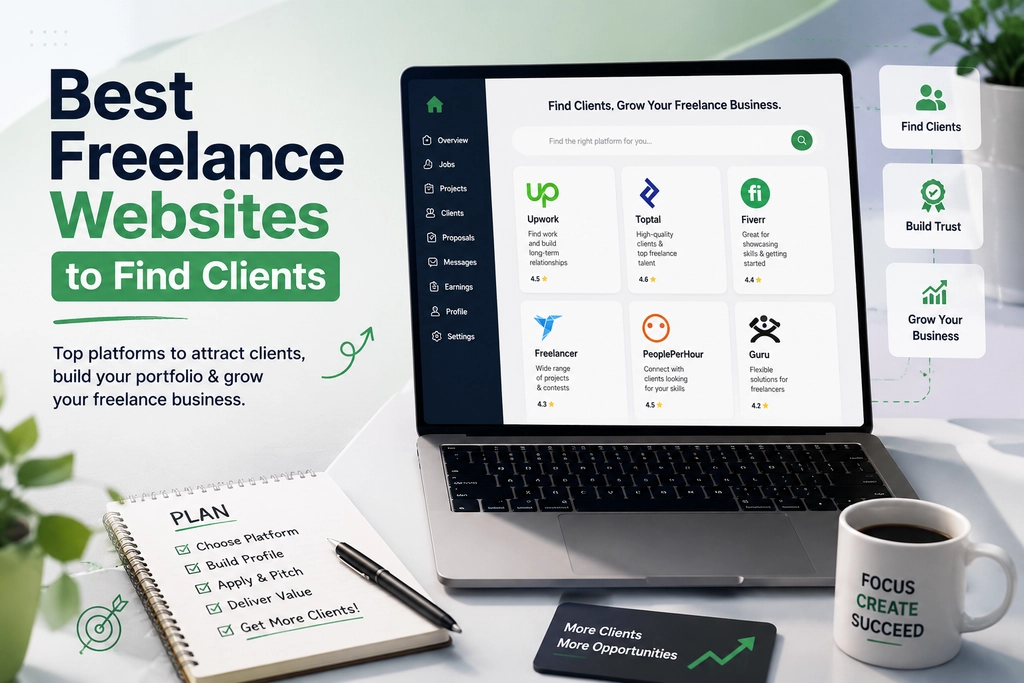
The best freelance websites to find clients in 2026 are Upwork, Fiverr, LinkedIn, Contra, Freelancer.com, Toptal (if you pass screening), PeoplePerHour, and niche freelancer websites in your craft. Use marketplaces for discovery, then run delivery and billing in your own system so platform fees do not own your whole business.
How to choose among freelancing platforms (quick filter)
Before you create five profiles, answer three questions:
- Offer shape: fixed packages (Fiverr-friendly) or custom scoped work (Upwork / LinkedIn)?
- Proof level: samples ready, or still building case studies?
- Rate goal: volume at starter rates, or fewer higher-ticket projects?
Insight: Most freelancers fail on online freelance platforms because they treat every job like a lottery ticket. Treat each freelancing website like a channel with a weekly outreach quota instead.
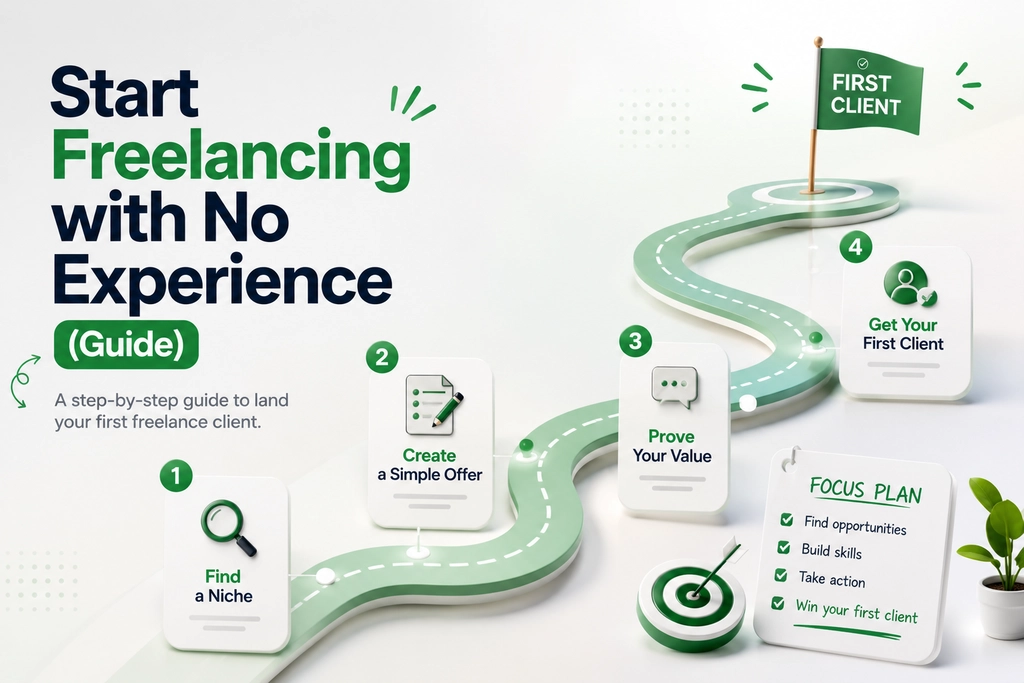
New to freelancing entirely? Pair this list with how to start freelancing with no experience before you burn weeks on weak proposals.
Best freelance websites in 2026 (ranked list)
1. Upwork — best overall freelance platform for recurring work
Upwork remains one of the top freelance websites for consultants, developers, marketers, and virtual assistants who sell ongoing or mid-sized projects. Clients post briefs; you propose with a clear plan, timeline, and relevant proof.
- Best for: custom scopes, retainers, mid-to-senior freelancers
- Watch for: proposal volume competition and service fees
- Win tip: rewrite the first three lines of every proposal to mirror the client’s language — generic templates lose
Example: A freelance ops specialist stops bidding on “anything admin.” They niche to “Notion + CRM cleanup for SaaS founders,” attach a 1-page sample audit, and only apply to jobs mentioning messy tools. Fewer proposals, higher reply rate — that is how freelancing platforms reward specificity.
2. Fiverr — best freelancing websites option for productized gigs
Fiverr flips the model: you publish packages buyers can purchase. It is one of the best freelancing sites when your offer is repeatable (logo concepts, email setups, short video edits, website audits).
- Best for: clear deliverables, beginners who need structure, package sellers
- Watch for: race-to-bottom pricing if your gig title is too broad
- Win tip: lead with outcome-based gig titles and a tight FAQ that pre-answers scope fights
Example: Instead of “I will write content,” a writer sells “3 product page rewrites for Shopify stores — 5-day turnaround.” Buyers understand the freelance platform purchase instantly.
3. LinkedIn — best freelance site for relationship-led clients
LinkedIn is not a classic marketplace, but it is one of the most effective freelancer websites for B2B work. Hiring managers and founders already browse there. Your profile is the landing page; posts and DMs are the funnel.
- Best for: consultants, coaches, B2B specialists, agencies hunting retainers
- Watch for: spammy outreach that gets ignored
- Win tip: publish weekly proof (teardowns, before/after notes), then message people who engage — not cold pitch lists only
Pattern interrupt: If marketplace fees frustrate you, LinkedIn is where many freelancers rebuild margins — but only after they can explain their offer in one sentence.
4. Contra — freelance platform built for independent operators
Contra positions itself as a commission-light freelance platform for independents who want portfolio-first discovery. It fits creatives and specialists who already have a point of view and want cleaner client relationships than contest-style bidding.
- Best for: design, brand, product, and specialist freelancers with samples
- Watch for: lower raw volume than giant marketplaces
- Win tip: treat your Contra page like a mini site: niche headline, selected work, clear CTA
5. Freelancer.com — high-volume freelancing platforms with contests
Freelancer.com is a large freelancing website with projects and contests. Volume is real; quality varies. It can work for beginners practicing proposals, or specialists who cherry-pick well-written briefs.
- Best for: practicing bids, global volume, contest-style work if you opt in deliberately
- Watch for: underpriced contests that train bad habits
- Win tip: set a minimum rate and skip contests that ask for free finished work
6. Toptal — curated top freelance websites tier for screened talent
Toptal is selective. If you pass screening, it can be one of the top freelance websites for higher-end engineering, design, and finance freelance work. The tradeoff is access: not everyone gets in, and that is the point.
- Best for: experienced specialists seeking premium clients
- Watch for: long screening; not a beginner path
- Win tip: prepare portfolio case studies with business outcomes, not just screenshots
7. PeoplePerHour — strong online freelance platforms for UK/EU clients
PeoplePerHour combines hourlies (packages) and projects. It is often overlooked in US-centric lists of freelancing websites, yet useful if your ideal clients are in the UK or Europe.
- Best for: European client density, package + project hybrids
- Watch for: uneven demand by niche
- Win tip: publish a few sharp hourlies that match local buyer language
8. Niche freelancer websites (often better than giant marketplaces)
Specialty freelance sites beat general freelancing platforms when your craft has its own hiring culture:
- Design: Behance, Dribbble (portfolio discovery more than closed payments)
- Writing: Contently-style networks, niche job boards, Substack/creator ops referrals
- Dev: GitHub visibility, specialized job boards, community Slacks
- Creative contests: 99designs if you deliberately compete on concepts
Example: A motion designer lands better-fit work from Dribbble inbound than from random marketplace gigs because buyers already saw style fit. That is the hidden ranking factor on “best freelancing sites” lists: taste match beats keyword match.
How to use freelance websites without racing to the bottom
Joining freelancing platforms is step one. Winning profitable work needs a method:
- Pick two channels max (example: Upwork + LinkedIn)
- Write one narrow offer and reuse it across profiles
- Build a proposal / gig template library with three proof links
- Set a weekly quota (e.g., 8 tailored proposals or 10 warm DMs)
- Track reply rate — if under 5%, fix positioning before blaming the algorithm
- Move repeat clients off the marketplace when contracts allow, and manage them in your own workspace
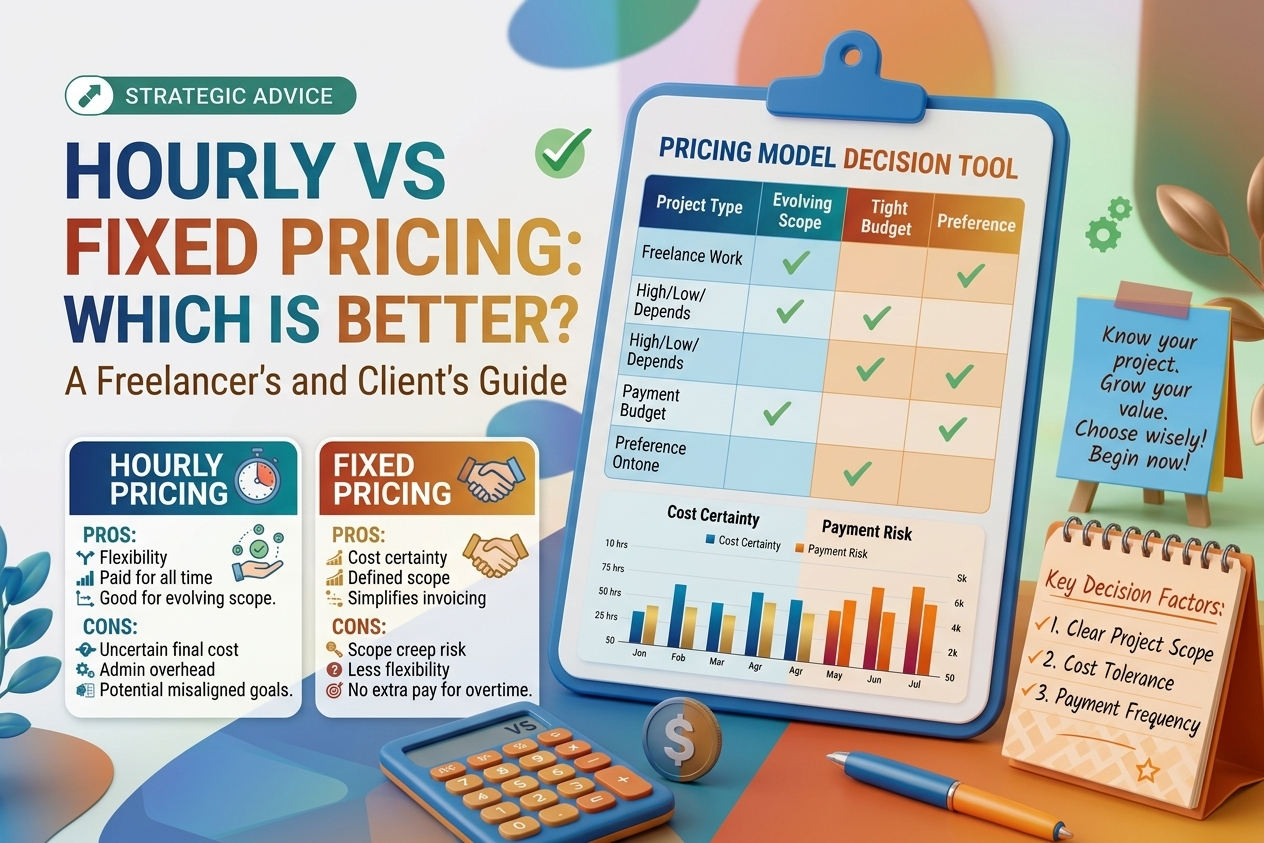
Pricing confusion kills good profiles. If you are unsure whether to sell hours or packages on these freelance sites, read hourly vs fixed pricing before you publish five conflicting offers.
After you win the client: keep delivery off the marketplace chaos
Freelance platforms are for acquisition. They are rarely the best place to run projects long-term. Once a client says yes, you need tasks, time, and invoices that do not live in ten chat threads.
A practical stack: Notion for your personal SOPs and pitch notes; a client workspace for projects, timers, and billing. Aenflow for freelancers helps when you want client records, time on tasks, and invoices in one loop — especially useful when Upwork Client A and LinkedIn Client B both need work this week.
If hours disappear between proposals and delivery, skim best time tracking methods for small business.
Best practices on freelancing websites
- Specialize your profile headline more than your skills list
- Lead proposals with the client’s problem, not your biography
- Keep samples public and specific (problem → action → result)
- Price for the package outcome when scope is clear
- Protect deposits and written scope even on “quick” freelance platform jobs
- Review your channel metrics weekly: applications, replies, hires, effective hourly rate after fees
Common mistakes on freelance sites
- Joining every freelancing platform: shallow profiles convert worse than one strong channel
- Copy-paste proposals: buyers spot them in seconds
- Competing only on price: you train clients to undervalue you
- Ignoring fees in your rate math: a “win” can still be a loss
- Never asking for reviews: marketplace trust compounds; silence resets you
- Running the whole business inside chat: missed scope and late invoices follow
Which freelance platform should you choose? (Decision shortcuts)
- Need structure and packages: start with Fiverr
- Need custom projects and retainers: prioritize Upwork + LinkedIn
- Have elite proof and want curated work: try Toptal screening
- Want commission-light independents: test Contra
- Target UK/EU buyers: add PeoplePerHour
- Creative portfolio discovery: niche freelancer websites + LinkedIn
Still stuck? Ask: where do my ideal clients already hire? Go there. Do not go where freelancers hang out for motivation posts.
FAQ
Short answers about freelance websites, freelancing platforms, and finding clients online:
What are the best freelance websites in 2026?
For most freelancers, the strongest mix is Upwork for recurring client work, Fiverr for productized gigs, LinkedIn for warm outbound, and one niche freelance platform in your specialty. “Best” depends on whether you sell packages, hourly expertise, or high-ticket consulting.
Which freelancing platforms are best for beginners?
Fiverr and Upwork are the most practical online freelance platforms for beginners because volume is high and the workflow is familiar. Start with a narrow gig or service, not ten categories. Warm outreach still converts faster than cold bidding alone.
Are freelancer websites worth the fees?
Yes if the platform brings clients you would not reach alone and you treat fees as acquisition cost. No if you stay stuck in low-price contests forever. Use freelancing websites to land work, then move repeat clients to direct relationships when contracts allow.
What is the difference between a freelance platform and a freelance site directory?
A freelance platform usually handles proposals, contracts, and payments (Upwork, Fiverr). Freelancer websites can also mean portfolio hubs or job boards (Behance, LinkedIn). Job boards give leads; marketplaces give a closed hiring loop.
How many top freelance websites should I join?
Two active freelancing sites beat five neglected profiles. Pick one marketplace for volume and one relationship channel (often LinkedIn or a niche community). Depth of proposals beats account sprawl.
Conclusion
The best freelance websites are not the ones with the loudest ads — they are the freelancing platforms that match your offer shape and where you can sustain weekly outreach. Upwork, Fiverr, LinkedIn, Contra, Freelancer.com, Toptal, PeoplePerHour, and niche freelancer websites each win for different freelancers.
Pick two channels, niche your profile, track reply rates, and move delivery into a system you control. That is how freelance sites become a client engine instead of a second unpaid job.
When you are ready to manage clients and billing outside marketplace chat, start a free Aenflow trial or explore freelancer workflows. More reading: freelancing guides and invoicing.