If you are stuck on how to get clients as a freelancer, you are not alone — and you are probably overcomplicating the first hire. Clients do not need your life story. They need a clear problem solved, a reason to trust you, and an easy yes. This use-case guide is for solo freelancers who need that first paid project, not another motivational thread.
You will get proven methods to how to get clients, how to find clients, and how to get freelance work without sounding desperate. Each method includes steps, a real scenario, and freelancer tips you can run this week — including cold outreach and warm asks that actually get replies.
Primary intent is informational: people typing how do i get clients or how can i get freelance work want a path. We will stay practical, then mention tools only when they help you deliver and bill after the yes.
How to get clients as a freelancer (direct answer)
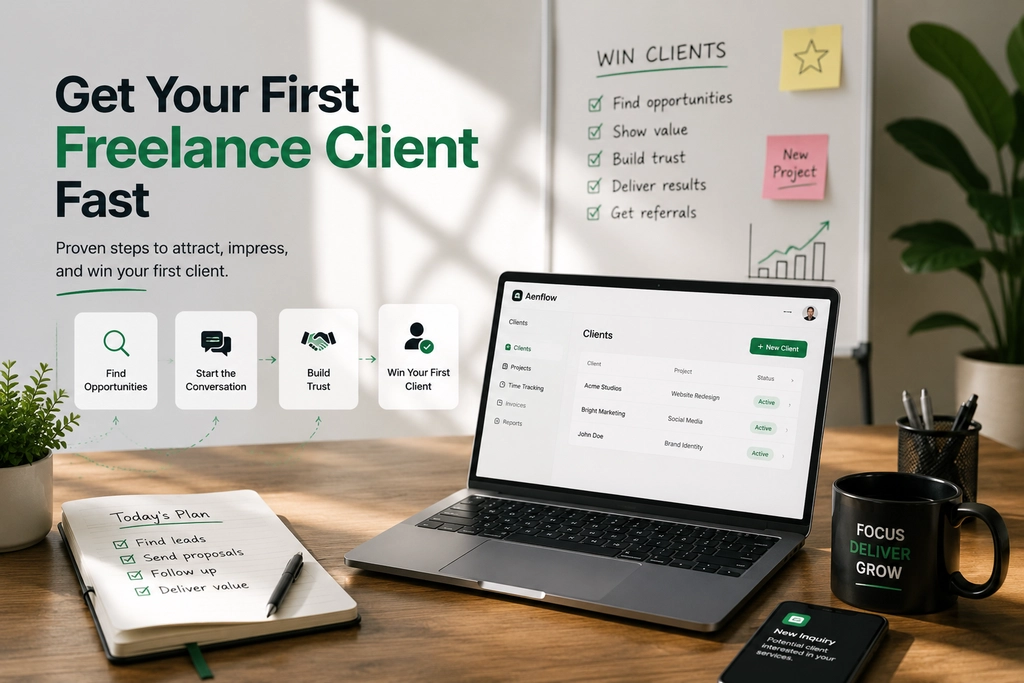
To get your first client as a freelancer: pick one narrow offer, create one proof piece, list 20 warm contacts, send short personalized asks, follow up once, then deliver and request a testimonial. Add cold outreach only after your offer sentence is clear. Marketplaces are optional accelerators — not the whole plan.
- Define a starter package someone can buy in one sentence
- Show proof (sample, audit, anonymized past result)
- Ask warm contacts and referrals first
- Run structured client outreach (LinkedIn + email)
- Close with clear scope, deposit, and timeline
Why first clients are hard (and what rankings miss)
Most articles say “network more” or “join Upwork.” Useful — incomplete. What blocks how to find freelance work is usually:
- An offer so broad nobody knows when to hire you
- Outreach that talks about you instead of their problem
- No follow-up (one message is not a campaign)
- Fear of charging, so you never send a real proposal
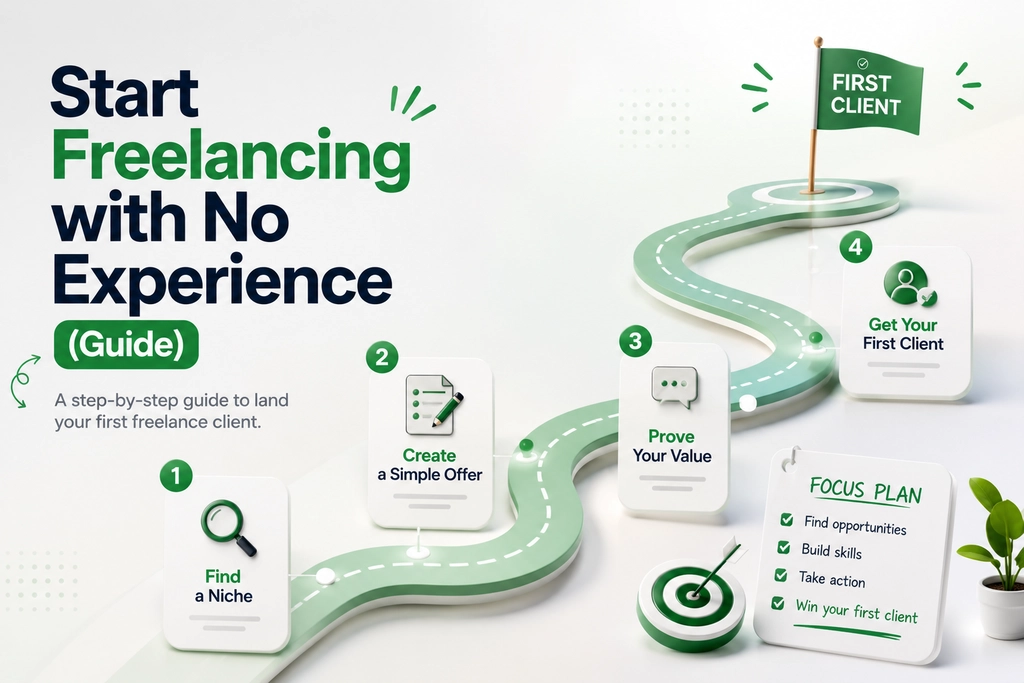
Insight: Your first client is a sales problem with a delivery promise attached — not a portfolio redesign project. If you still need the business basics, start with how to start freelancing with no experience, then return here for acquisition.
Method 1: Warm asks — the fastest way how do I get freelance work
Warm outreach beats cold for almost every beginner. People who already know you reduce trust cost to near zero.
Steps
- List 20 names: coworkers, classmates, local owners, community members, past managers
- Write one offer sentence: who you help + what you deliver + timeline
- Send a short message asking for a referral or a small paid starter
- Follow up after 5–7 days if silent
- Track replies in a simple Notion board or spreadsheet
Message you can send: “I help [type of business] with [deliverable] in [timeline]. I just finished [sample]. If you know anyone stuck with [pain], I have two starter slots this month — okay if I send a one-pager?”
Example: A former support agent messaged three SaaS friends about “customer email cleanup + reply templates.” One paid a fixed starter fee within ten days. That answered how do i find clients better than fifty marketplace bids.
Method 2: Productized starter offer (make “yes” easy)
How to get freelance jobs gets easier when buyers are not inventing the scope with you. Package the first sale.
Steps
- Name a 3–10 day package with inclusions and exclusions
- Set a starter price and 50% deposit
- Create a one-page offer (Google Doc is fine)
- Attach one proof sample
- Use the same package across email, LinkedIn, and proposals
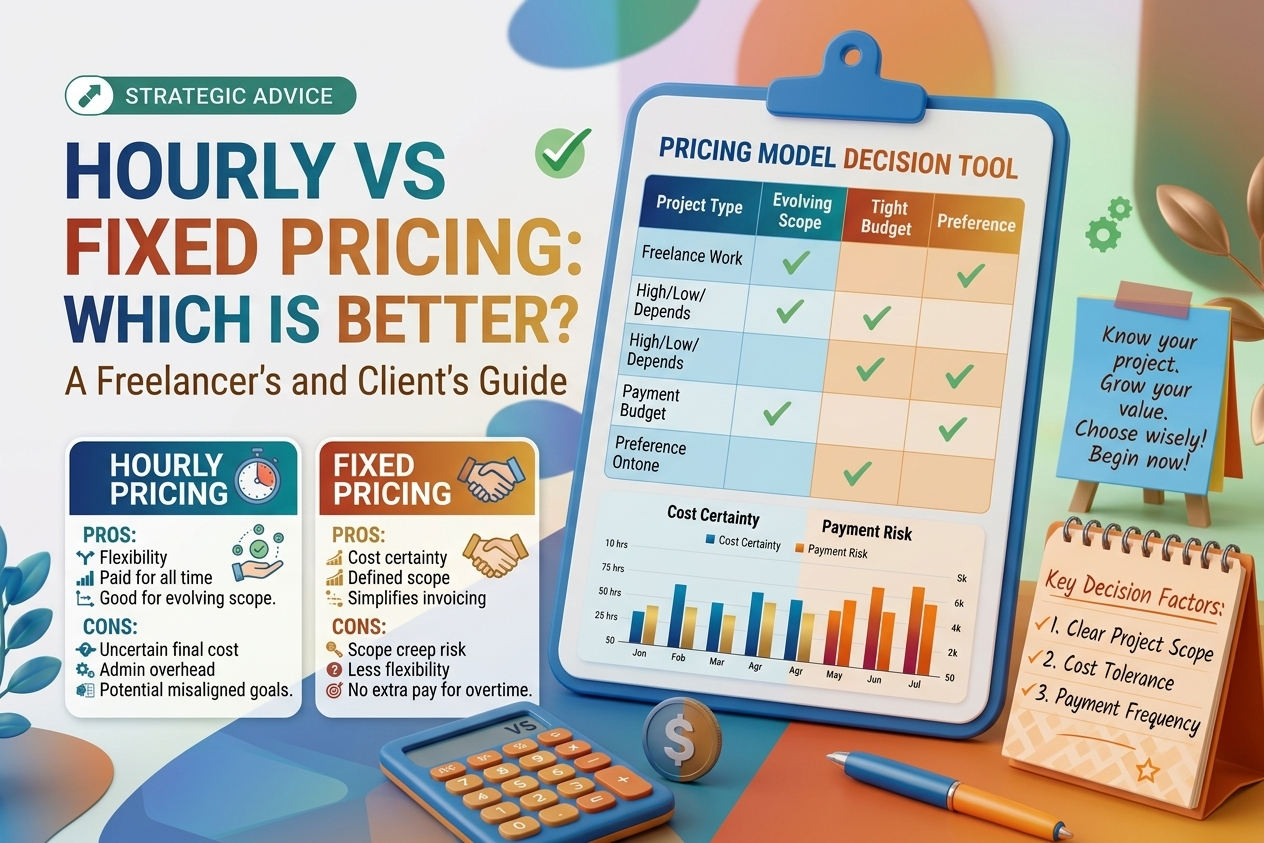
Example — freelance artist: Instead of “commissions open,” an illustrator sells “1 product hero illustration + 2 revisions in 7 days.” That is how to find clients as a freelance artist when browsers hesitate at open-ended pricing. For rate structure later, see hourly vs fixed pricing.
Method 3: Cold outreach that does not feel spammy
Cold outreach works when it is specific. Generic “I can grow your business” emails deserve the trash folder. Here is how to reach out to potential clients without burning your domain reputation.
Cold outreach email framework
- Line 1: specific observation about their site, offer, or content
- Line 2: the problem that observation implies
- Line 3: your fix in one sentence + soft proof
- Line 4: a low-friction ask (15-min call or “want the 3 notes?”)
Cold email to potential client (SEO example — no phone required):
“Noticed your services page ranks for [query] but the H1 and title don’t match the intent — easy fix. I help small SaaS teams clean service pages so they convert clearer. I wrote three notes on yours (no pitch deck). Want me to send them?”
That is how to get SEO clients without cold calling: lead with unpaid insight, not a discovery-call trap. Cap daily sends. Personalize every cold outreach email. One follow-up max in the first week.
Example: A freelance SEO wrote 12 personalized notes to local service businesses. Three replied. One bought a fixed page rewrite. Client outreach volume was small; relevance was high.
Method 4: Use freelance websites as a secondary engine
Marketplaces help how to get freelance work when your profile is niche and your proposals are tailored. They are weaker as your only plan.
- Pick one marketplace + one relationship channel (often LinkedIn)
- Mirror your starter package in the profile headline
- Apply only where your proof clearly matches
- Track effective hourly rate after fees
For a ranked breakdown of channels, use best freelance websites to find clients. Treat platforms as acquisition — not your permanent office.
Method 5: Partner referrals (borrow trust)
Adjacent freelancers and small agencies constantly need specialists. How to get clients can be a referral agreement, not a stranger pitch.
Steps
- List partners: web designers, accountants, coaches, developers, photographers
- Offer a clear referral scope (“I take overflow copy after design is done”)
- Make sending you easy: one-pager + calendar link
- Reciprocate when you can — reciprocity keeps referral engines alive
Example: A bookkeeper partnered with two Shopify freelancers. They sent cleanup clients after launches. No ads. Shared trust closed faster than cold email alone.
Method 6: Proof content that attracts inbound
You do not need a media brand. You need three public proof pieces that make how do i get clients easier when someone Googles you after a DM.
- One teardown or audit PDF
- One before/after case note
- One short LinkedIn post showing the method
Keep drafts in Notion. Publish weekly for a month. Inbound will not replace outreach on day one — it compounds reply rates when people check if you are real.
Close the deal: from interest to first invoice
Getting a reply is not getting a client. Finish the loop:
- Confirm the problem in a short call or email thread
- Send scope, price, timeline, revision limit
- Collect a deposit before work starts
- Create a client record and task list so delivery stays clean
- Invoice on schedule and ask for a testimonial after delivery
Once someone pays, scattered chats become expensive. Tools like Aenflow for freelancers help when you want client management, tasks, and invoices in one place — so your first win does not turn into admin chaos. Track time even on fixed projects so you learn your real speed; see time tracking when that habit matters.
A 7-day sprint to get your first freelance client
- Day 1: Write offer sentence + starter package
- Day 2: Build or polish one proof sample
- Day 3: Message 10 warm contacts
- Day 4: Send 8 personalized cold outreach notes
- Day 5: Follow up silents + post one proof snippet
- Day 6: Book calls / send proposals
- Day 7: Close one starter or refine based on objections
Miss a day? Resume. Do not restart the identity crisis. Consistency answers how to get freelance jobs faster than intensity.
Best practices (freelancer tips that compound)
- One offer until it converts — then expand
- Personalize every cold outreach email with a real observation
- Ask for referrals even when the answer is no
- Follow up once; silence is often busy, not rejection
- Price the package, not your anxiety
- Write scope before you start work
- Log every lead so client outreach stays measurable
Common mistakes when learning how to get clients
- Waiting for a perfect website: a clear Doc + sample can close first sales
- Only applying to job boards: how to find clients often starts closer than you think
- Pitching skills instead of outcomes: buyers hire results
- No deposit: “pay when happy” becomes free labor
- Mass identical cold email: burns trust and deliverability
- Stopping after one ignore: polite follow-ups win quiet yeses
Real-world use cases
Remote copywriter: Warm list first, then LinkedIn client outreach with teardown posts. First client: a coach who needed a sales page rewrite package.
Freelance artist: Public style sample + Dribbble/Behance + DMs to product founders. First paid piece funded the next portfolio upgrade — classic how to find clients as a freelance artist loop.
SEO freelancer: Avoided phone scripts. Used insight-led cold outreach email to local firms. One fixed technical cleanup became a monthly retainer after results showed.
FAQ
Quick answers for how to get clients as a freelancer, cold outreach, and finding freelance work:
How do I get clients if I have never freelanced before?
Start with a narrow paid offer, one proof sample, and warm contacts before cold outreach. How do I get freelance work without experience is mostly a positioning problem — sell a small outcome someone already wants.
How can I get freelance work without marketplaces?
Use referrals, LinkedIn client outreach, local business asks, and partnerships with adjacent freelancers. Marketplaces help, but they are not required to find freelance work if you can explain your offer in one sentence.
How do I find clients as a freelance artist?
Lead with a visible style sample, then pitch galleries, brands, product founders, and creatives who need your exact look. Portfolio platforms help discovery; direct messages and warm intros close the first paid piece.
How to get SEO clients without cold calling?
Publish short audits, teardown posts, or before/after notes, then message people who engage. A cold outreach email with one insight about their site beats phone scripts for most SEO freelancers.
What should a cold email to a potential client include?
One specific observation, one clear offer, proof you can deliver, and a soft next step. Keep it under 120 words. No attachments on the first cold outreach email.
How long does it take to get your first freelance client?
Many freelancers land a first paid task within 2–6 weeks of consistent weekly outreach. Delays usually come from vague offers or waiting for a perfect brand site before how to reach out to potential clients begins.
Conclusion
How to get clients as a freelancer is a repeatable system: clear offer, proof, warm asks, disciplined cold outreach, and a clean close with deposit and scope. Your first client is not a personality award — it is the result of weekly outreach that respects the buyer’s time.
Run the methods above until one yes lands, then document the win and raise your price slightly for the next lead. That is how how to get freelance work turns into a real practice instead of a hopeful profile.
When you are ready to manage that first client without chat chaos, try Aenflow free or explore freelancer workflows. Keep learning with freelancing guides and invoicing.