Most “how to start freelancing” posts assume you already have case studies, referrals, and a polished brand. That is not your reality if you are figuring out how to start freelancing with no experience. You have skills. You may not have client logos yet — and that is a solvable gap, not a career verdict.
This complete guide shows how to start a freelance business from zero: pick an offer, prove you can deliver, land the first paid project, and set up simple systems so you get paid without drowning in admin. You will see step-by-step methods, real beginner scenarios, and the advanced moves that separate hobby pitching from starting a freelance business that lasts.
Primary search intent here is informational — people searching how to become a freelancer want a path, not a product pitch. We will stay practical, then mention tools only when they remove friction.
How to start freelancing with no experience (direct answer)
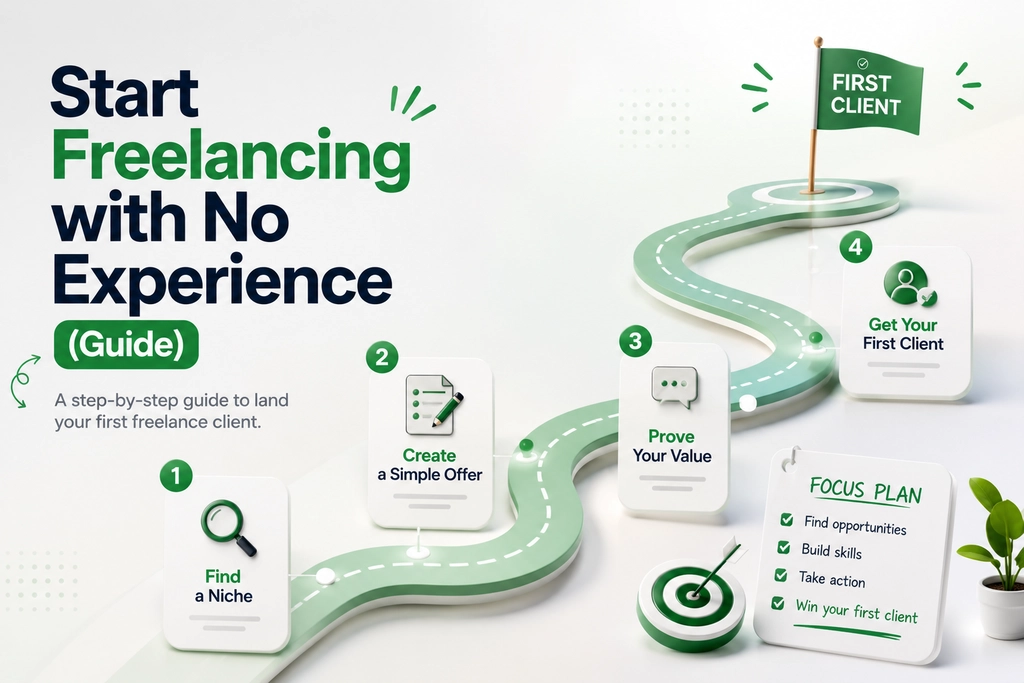
To start freelancing with no experience: choose one narrow paid offer, create one proof sample, set a starter price, pitch warm contacts first, deliver a small paid project, then document the result as your first case study. Repeat weekly until inbound work begins.
- Pick one service you can deliver in 1–2 weeks
- Build one proof piece (sample, audit, before/after, or volunteer result)
- Write a one-page offer: who you help, what you deliver, price, timeline
- Pitch 10–20 people who already know you before cold outreach
- Deliver, invoice, ask for a testimonial, then raise your rate slightly
What “no experience” actually means (and what clients buy)
Clients rarely buy “years of freelancing.” They buy risk reduction: Will this person finish? Will it be usable? Will communication be clear? How to get into freelancing with no experience is mostly about lowering that risk without pretending you ran a Fortune 500 team.
Experience you already have often counts:
- Job tasks you did well (reports, design, support, research, editing)
- School or bootcamp projects with clear outcomes
- Helping a friend’s business, nonprofit, or family shop
- Personal projects with measurable results (traffic, sales, saved hours)
Insight: A weak generalist pitch (“I can do anything online”) reads as more inexperienced than a sharp beginner offer (“I rewrite product pages so they convert clearer — starter package: 3 pages in 5 days”).
How to start freelancing step by step
Use this sequence if you want how to start freelancing for beginners without spinning in setup mode. Each step has a finish line. Do not skip proof for branding, or pitching for “research.”
Step 1: Choose a narrow offer you can ship fast
How to get started freelancing fails when the offer is vague. Narrow until a stranger could explain it in one sentence.
- Who: one type of client (local shops, SaaS founders, coaches, ecom brands)
- What: one deliverable (landing page copy, weekly social drafts, bookkeeping cleanup)
- When: a clear timeline (3–10 days for a starter package)
- Why now: a pain they already feel (missed leads, messy books, slow hiring)
Example: Maya worked retail and wrote store emails as a side duty. Her first freelance offer was not “marketing.” It was: “3 promotional emails for small retail shops — written, scheduled, and reviewed in 7 days.” That specificity made how to start freelancing from home feel concrete instead of abstract.
Step 2: Build proof without waiting for a “real” client
If you have no portfolio, manufacture one ethically:
- Pick a real public business and create a free sample (mock redesign, audit PDF, sample article)
- Document a past job result as a mini case study (problem → action → result)
- Offer a discounted or free pilot to one warm contact in exchange for a testimonial and permission to show the work
- Publish the sample with before/after notes — not just pretty screenshots
This is how to become a freelancer when platforms ask for experience you do not have yet: you show the work product, not a CV line.
Step 3: Price a starter package (not your dream rate)
Beginners often undercharge forever or freeze and charge nothing. Set a starter package that is low enough to reduce buyer fear, high enough that you take it seriously.
- Price the package, not “per vague hour” for your first three sales
- Write what is included and what is not (revisions, meetings, extras)
- Decide payment terms: 50% upfront is normal for new relationships
- Plan your second and third price steps after you have testimonials
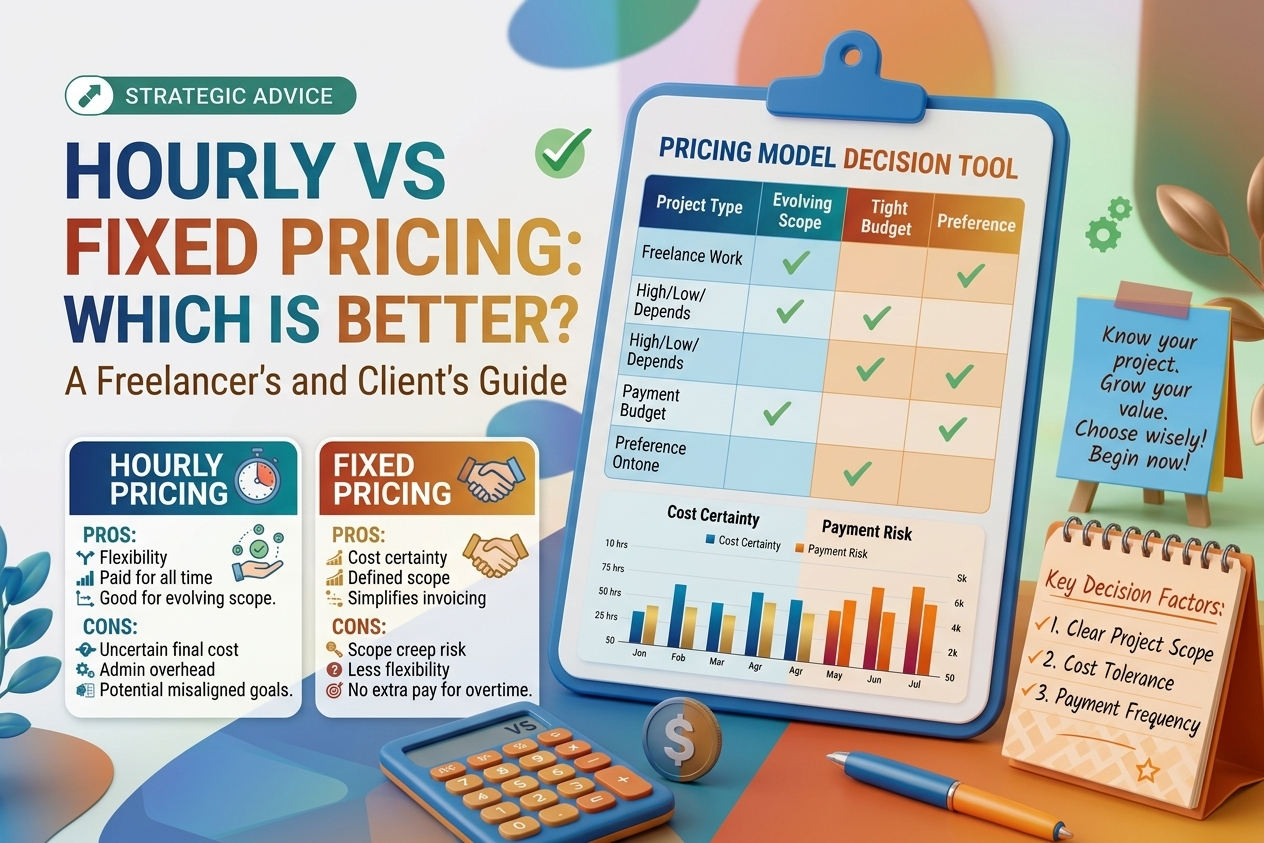
When scope gets messy later, compare models with hourly vs fixed pricing. For now, fixed starter packages keep how to start a freelance business simpler.
Step 4: Set up a lean home base (tools that earn their keep)
How to start freelancing from home does not require a studio. It requires a boring, reliable stack:
- Email + calendar for scheduling and follow-ups
- Notion (or similar) for your offer page notes, checklists, and SOPs
- A client + project + time + invoice workspace so delivery and billing stay connected
- A simple contract template (scope, timeline, payment, revision limit)
Once you have a paying client, scattered notes become expensive. Tools like Aenflow for freelancers help when you want clients, tasks, timers, and invoices in one loop — especially useful the week you land client two and still remember client one’s unpaid balance. See client management and invoice management when you outgrow inbox chaos.
Step 5: Pitch warm contacts before cold marketplaces
Marketplaces are crowded. Warm outreach converts faster when you are learning how to get started as a freelancer.
- List 20 people: former coworkers, classmates, local owners, community members
- Send a short message: what you offer, who it helps, one proof link, a soft ask
- Ask for referrals even if they are not buyers
- Follow up once after 5–7 days — most “no” answers are silent first messages
Message skeleton: “I help [type of business] with [specific deliverable]. I just finished [sample/result]. If you know anyone stuck with [pain], I have two starter slots this month — happy to send details.”
Example: Jordan left a support job and offered “customer email cleanup + reply templates” to three SaaS friends. One paid a fixed starter fee. That single project answered how to get into freelancing with no experience better than six months of anonymous bidding.
Step 6: Deliver like a pro on project one
Your first paid job is a marketing asset, not just income. Treat it like a case study in progress.
- Confirm scope in writing before you start
- Share a simple timeline with milestones
- Track time even on fixed projects so you learn your real speed
- Ask for feedback mid-way, not only at the end
- Invoice on schedule — delayed billing teaches clients that money is optional
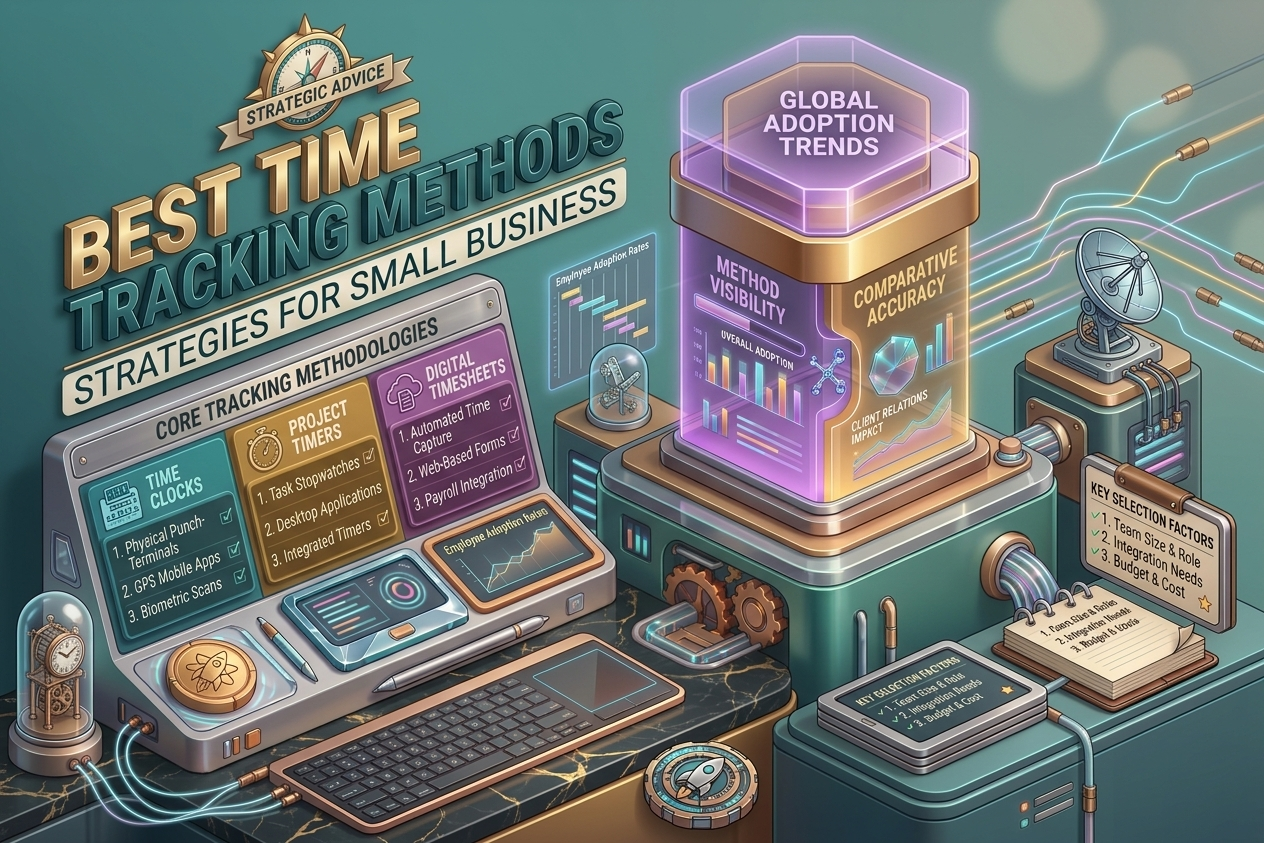
Task-based timers make this easier than reconstructing your week on Friday. If you want that habit early, skim best time tracking methods for small business and time tracking on tasks.
Step 7: Turn project one into project two
After delivery:
- Ask for a short testimonial and permission to share the work
- Write a one-page case note: problem, what you did, result
- Offer a maintenance or next-step package while trust is high
- Raise your starter price 10–20% for the next new client
This is how to start freelancing step by step in the real world: each project funds the next proof piece. Waiting for a perfect website before project two is how beginners stall.
A practical 14-day plan to get started freelancing
If you want a calendar, not theory, use this sprint for how to start freelancing for beginners:
- Days 1–2: Choose one offer. Write the one-sentence pitch and package contents.
- Days 3–5: Create one proof sample. Publish it somewhere shareable.
- Day 6: Set price, payment terms, and a simple contract.
- Days 7–10: Send 15 warm pitches. Log replies in one place.
- Days 11–12: Follow up. Book discovery calls. Keep calls under 20 minutes.
- Days 13–14: Close one starter package or refine the offer based on objections.
Missed a day? Resume — do not restart the whole plan. Consistency beats intensity when you are starting a freelance business.
Where beginners find first clients (beyond “post on LinkedIn”)
Channels ranked by beginner conversion, not hype:
- Warm network: fastest path for how to get started as a freelancer
- Local / niche communities: Facebook groups, Slack communities, chambers, coworking spaces
- Partner referrals: accountants, web designers, coaches who need a specialist beside them
- Content that shows the work: short audits, teardown posts, before/after notes
- Marketplaces: useful for practice, risky as your only plan — competition is fierce
Pattern interrupt: If your only plan is “apply to 50 Upwork jobs,” you are competing on price with people who already have reviews. Warm outreach is not outdated — it is how most first freelancing income still starts.
Advanced tips once you have your first paid client
Complete guides should go past day one. After you know how to start freelancing, these moves compound:
- Productize: turn custom work into named packages with clear boundaries
- Specialize further: “email for Shopify brands” beats “freelance writer”
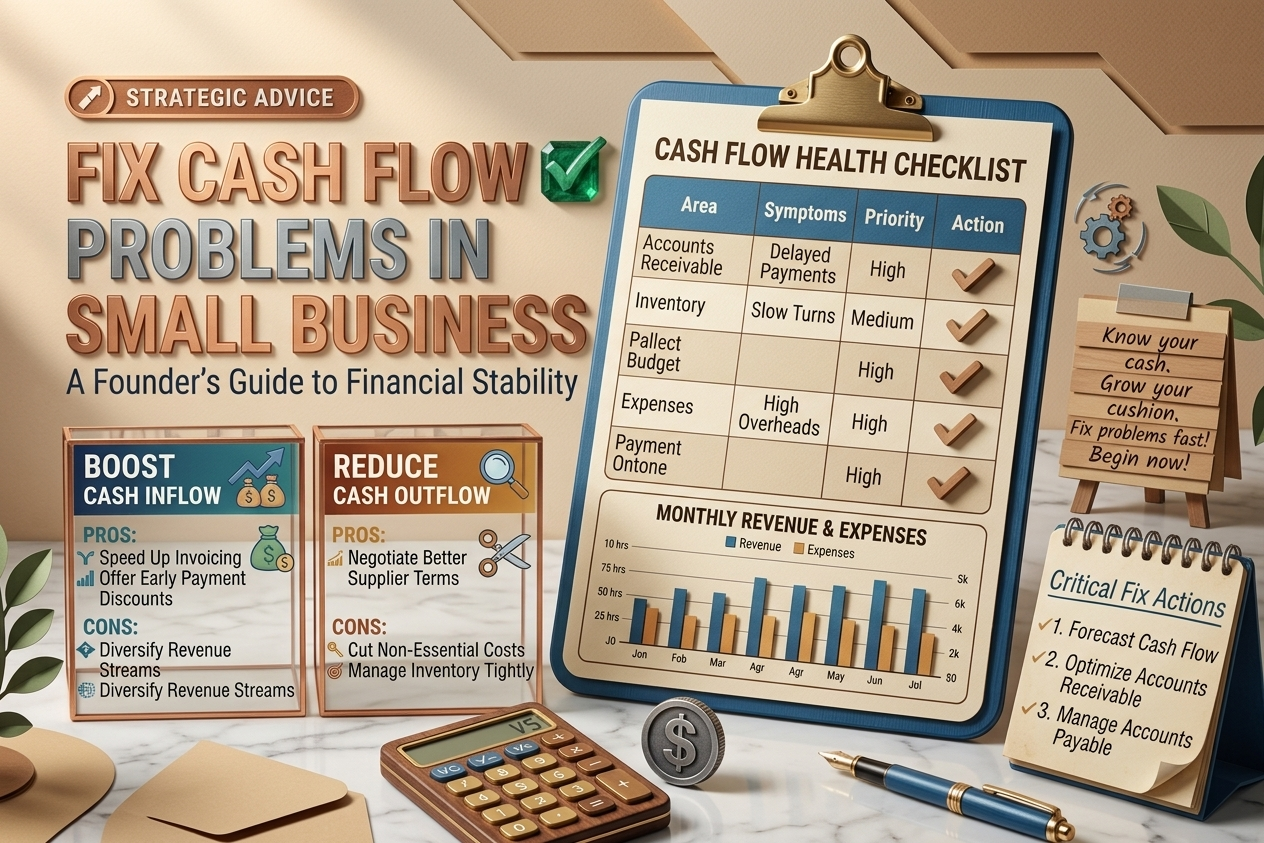
- Protect cash flow: deposits, net-7 or net-14 terms, and same-week invoicing — see cash flow problems for small business
- Systematize delivery: checklists in Notion + projects in your workspace so quality does not depend on memory
- Raise rates on new clients first: keep loyal early clients on old rates only if the relationship is strategic
Example — remote consultant path: After two fixed audits, Sam switched new work to a monthly advisory retainer with a capped hour bank. Tracking hours on tasks kept the retainer honest. That is how to become a freelancer who scales without inventing a new process every Monday.
Best practices for starting a freelance business
- Sell one offer until it is boringly clear — then expand
- Prefer deposits over “pay when happy” for first clients
- Write scope before work begins, every time
- Track time from day one so you know your real hourly yield
- Keep client notes, files, and invoices under one client record
- Ask for testimonials while the win is fresh
- Batch admin: proposals, invoices, and follow-ups in set windows
When your pipeline grows, a single workspace for projects, time, and billing beats a collage of free tools glued together with screenshots.
Common mistakes when learning how to start freelancing
- Building a website for six weeks before pitching: a Google Doc offer + sample often converts sooner
- Saying yes to every skill: broad offers look inexperienced
- Working without a deposit: unpaid “test projects” become free labor
- Ghosting your own follow-ups: one polite nudge closes more deals than a perfect first email
- Ignoring admin until tax season: invoices and time logs are part of how to start a freelance business, not optional polish
- Comparing yourself to veterans on social media: you are competing for your first client, not their brand deal
Real-world beginner scenarios
Career switcher: A teacher starts freelancing with curriculum writing for online course creators. Proof: two sample lesson outlines. First client: a former colleague launching a course. Home setup: laptop, Notion checklist, invoice from a simple workspace.
Side-hustle parent: Evening-only availability. Offer: weekly product description batches for one ecommerce niche. Fixed package. Warm pitches to local makers. This is how to start freelancing from home around real constraints — not a fictional 40-hour blank calendar.
Agency escapee with “no freelance brand”: Strong skills, zero public portfolio (NDAs). Solution: recreate anonymized case studies and a paid sample for a friendly founder. Experience existed; public proof did not. Freelancing started when proof became shareable.
FAQ
Quick answers for people searching how to start freelancing with no experience and related questions:
Can you really start freelancing with no experience?
Yes — if you redefine experience. Clients buy outcomes, not job titles. Convert skills from jobs, school, side projects, or volunteering into a narrow paid offer, then prove it with a small sample or case-style write-up.
How to start freelancing for beginners with zero clients?
Pick one service, set a starter price, create one proof piece, then pitch 10–20 warm contacts before cold outreach. Your first paid project is usually closer than marketplace bidding makes it feel.
How to start freelancing from home without a big setup?
You need a quiet workspace, reliable internet, a way to send invoices, and a place to track tasks and hours. Fancy branding can wait. Delivery and payment systems matter first.
How long does it take to get into freelancing with no experience?
Many beginners land a first paid task within 2–6 weeks if they pitch weekly and keep the offer specific. Waiting for a “perfect” website often delays income more than skill gaps do.
Should beginners charge hourly or fixed when starting a freelance business?
Fixed prices for small, clear scopes protect you from underestimating time. Switch to hourly when scope is fuzzy or ongoing. See a full breakdown in hourly vs fixed pricing once you have a few projects.
What tools do I need to get started as a freelancer?
Start lean: email, calendar, a notes app like Notion for SOPs, and one workspace for clients, tasks, time, and invoices. Aenflow fits when you want that loop in one place instead of four disconnected apps.
Conclusion
How to start freelancing with no experience is not a mystery — it is a sequence: narrow offer, proof, starter price, warm pitches, clean delivery, then proof again. You do not need to feel “ready.” You need a package someone can buy this month.
If you follow the step-by-step path above, how to get started freelancing stops being a vague identity shift and becomes a set of weekly actions. Keep systems light, protect deposits, and let each project fund the next.
When you are ready for clients, tasks, time, and invoices in one place, try Aenflow free or explore the freelancer workflow. For more on running the business side, browse freelancing guides and invoicing.